
The 26th annual seminar “How to Teach about the Holocaust” took place in Terezín between March 21–23, 2025. Every year, this event offers a comprehensive program focused on teaching this topic.
This year’s event was attended by 47 teachers from primary and secondary schools across various regions of the Czech Republic. The seminar, organized in collaboration with the Terezín Memorial, the Jewish Museum in Prague, and the Museum of Romani Culture in Brno, received financial support and was held under the auspices of the Ministry of Education, Youth, and Sports of the Czech Republic.

The three-day program offered attendees a range of lectures, workshops, and guided tours. During the lectures, the schoolteachers learned about various topics, including the historical status of Jews during the period of enlightened absolutism, the issue of anti-Semitism—its enduring stereotypes and current manifestations, the psychological aspects of genocide, and the Holocaust experienced by the Roma and Sinti during World War II. The seminar participants displayed enhanced interest in the presentation called “The Holocaust Education,” which provided them with practical tools and methodologies for teaching this subject.
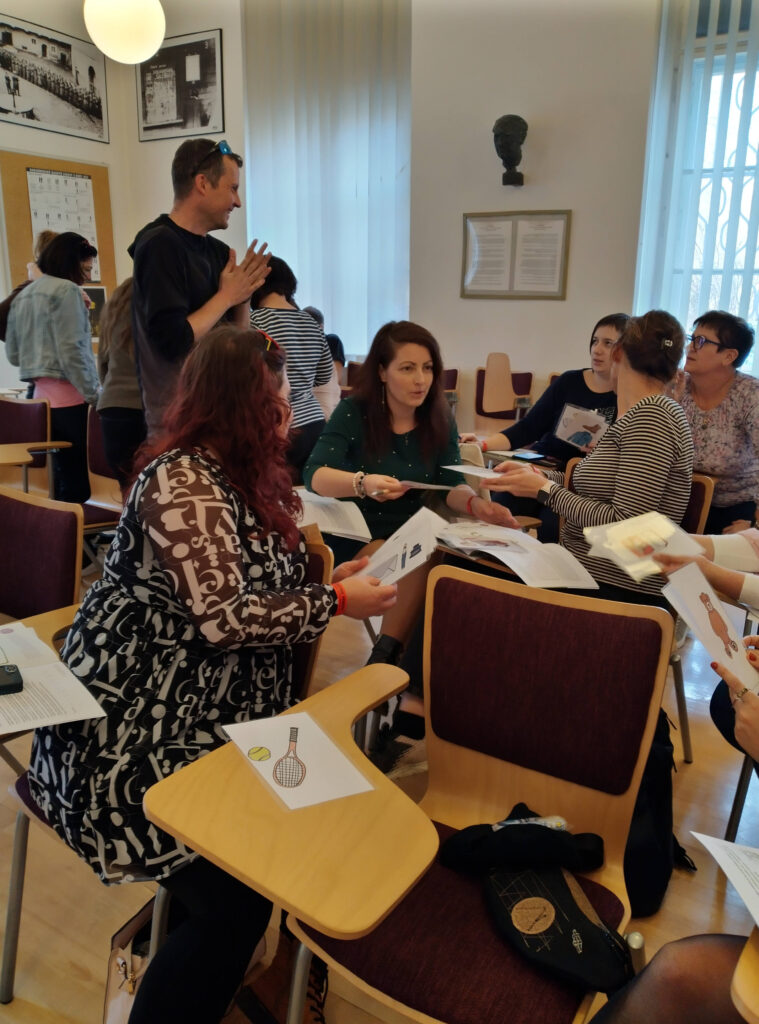
The program also featured three workshops focused on specific themes: one conducted by the Terezín Memorial, another by the Museum of Romani Culture in Brno, plus a theater and art workshop led by PhDr. Jana Jebava. The latter introduced participants to a creative and experiential approach to learning.

The practical portion of the seminar featured guided tours of notable historical sites, including the former Terezín Ghetto, the Gestapo Police Prison in the Small Fortress, and the Jewish Quarter in Prague. These tours allowed participants to connect their acquired knowledge with specific historical locations.
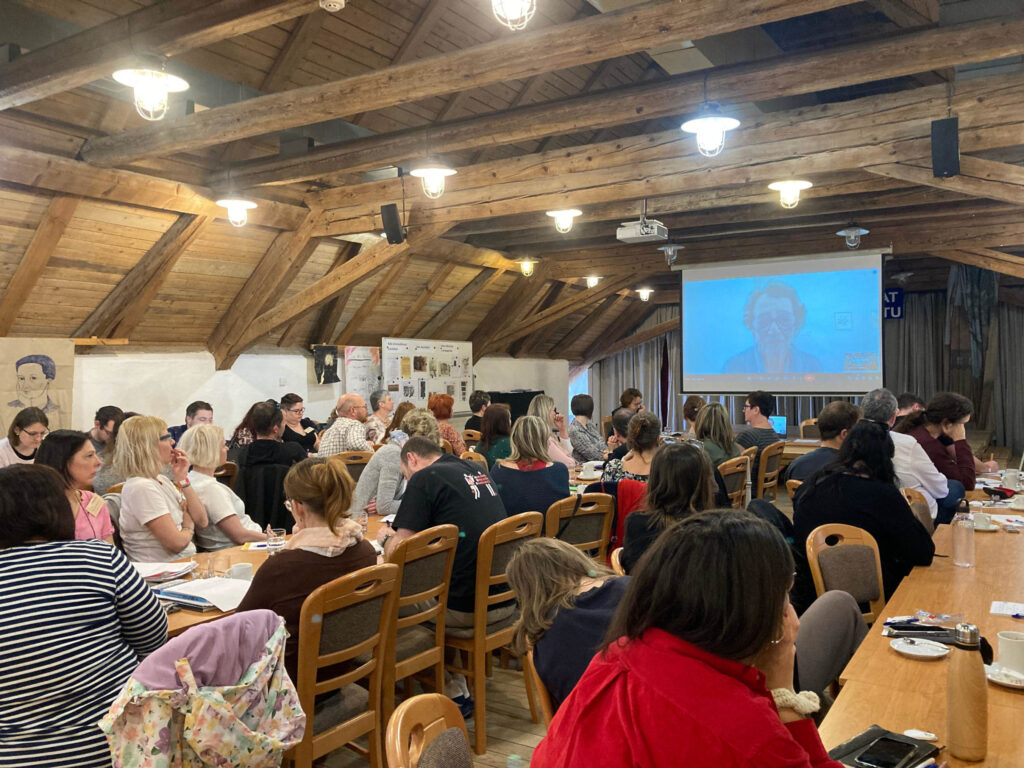
One of the most moving moments of the seminar was the online meeting with Dita Krausová, a survivor of the Terezín Ghetto. She shared her personal memories of life in the Ghetto, her deportation, and her experiences after the war in an Israeli kibbutz. Her testimony enriched participants’ understanding of the individual stories and human experiences related to the Holocaust.
Teachers’ enthusiasm for the seminar and their feedback indicate that the topic holds a significant place in classroom teaching, and that educators value the chance to explore it within a broader historical and methodological framework
Jana Švarcová


