Newsletter 4/2012

Fates of Birkenau Boys

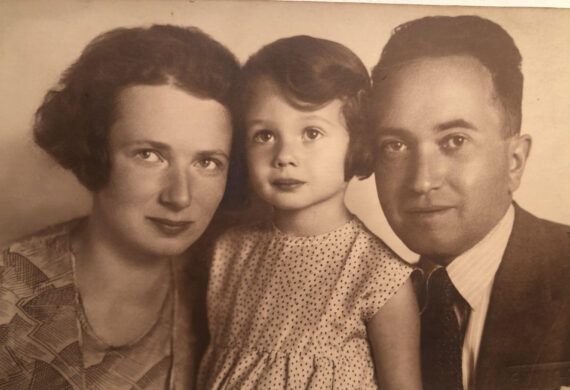
Jiří Diamant, 1948

Jiří Diamant, 1948

Jiri Diamant was deported to the Terezin ghetto by transport Ad from Brno on 23rd March 1942 together with his parents and a younger brother. He stayed at the boys’ Heim L 417 for many months, then he and his family were sent to the family camp in Birkenau in December 1943 (for details see Newsletter 1/2004). In early July 1944 there was made a decision about a selection in the camp, which in fact meant liquidation of the family camp. Only 3,500 of the present men and women were then recognized as able-to-work and left that place of death. The rest of the prisoners – old, ill and mothers with children – were to face gas chambers.

Fates of Birkenau Boys

Among them were dozens of boys around 14 and 15 years of age. Then one of them found the courage and asked the camp “doctor” Mengele to chose individuals able to work also among them. Surprisingly, he agreed and had a crowd of teen prisoners march again. Out of them, he compiled a group of about 90 boys which he then moved to the nearby men’s camp, marked B II d. All other prisoners of the family camp were to die. As obvious, the International Red Cross was unlikely to visit local sites, therefore the existence of the family camp was not necessary.

The boys were placed in the men’s camp in Block 13, known as a criminal block. The prisoners there – Poles, Germans, Russians – were under a tightened regime and got harder work. Czech boys drew attention there, however, the block supervisor did not limit their activities much; they played football or sang together Czech songs. From the Sonderkommando (Special Commando), who lived in the neighbouring block, they sometimes got extra bread and especially information about crematoria. So they learned about the fate of their relatives who had not survived the selection in the family camp. Their days were mostly filled up with work - they helped in the kitchen, brought from outside things needed to repair roads or heat houses. Some of them even worked outside the camp.

After a few weeks a selected group of “able” boys was sent to work in the Reich. Post-war statistics show that only about half of the Birkenau boys was lucky and lived to see the liberation. Over 40 of them came back home, mostly as orphans.

These boys who went through the Auschwitz hell are calledBirkenau Boys”.

(According to the survivors of Birkenau Boys: Toman Brod, Jiri Diamant and John Freund.)

„Birkenau Boys“ in Terezin

„Birkenau Boys“ in Terezin

Jiri Diamant was one of those who got among the “Birkenau Boys”. He left Birkenau in a able-to-work group and was liberated in Buchenwald. He survived as the only one of his family.

When Jiri returned home after the liberation, he studied psychology and philosophy at the Faculty of Arts of the Masaryk University in Brno, and later also medical college at the Charles University in Prague. He took the carrier of a teacher and researcher. Since 1968 he has been living with his family in the Netherlands. He worked in his branch until late retirement. His lectures could also be heard at universities in Brno, Olomouc and Prague after the Velvet Revolution in 1989.

(Great success was his lecture with the title World after Holocaust at the I9th Popular Scientific Symposium for the Czechs and Slovaks living in the Netherlands in 1994, printed in the Terezin paper No. 24 in 1996. No. 23 introduced Diamant’s Notes on the Psychology of Life in the Terezin Ghetto.)

Chl.

Postscript

Family roots of Jiri Diamant are in Uhersky Brod in Moravia. As a boy he used to go there on holidays to both his grandparents the Diamants and the Löwys. Both families had decent memorials built for their dead at the local Jewish cemetery. When J. Diamant then arrived in the country first time after his emigration in 1968 and visited the graves of his ancestors, he remained shaken by the overall dismal state of the cemetery. Even more he got dismayed by the fact that both marble headstones from the graves of his former family had disappeared.

Jiří Diamant

Jiří Diamant

Poem about the Jewish cemetery is an elegy of the only family member who survived the Jewish holocaust during the Second World War.

Content of the poem:

Headstones at the Uhersky Brod cemetery recall that local Jewish soldiers died in the First World War for the Austria-Hungarian emperor. During the Second World War the local Jewish community was scattered, the idyll of Masaryk Republic was trampled by the Nazi invasion. After the war, some returned and lived in Brod in harmony with the others.  The gravestones, however, the memorials of old times, fall into disrepair and nobody cares about them.

Seminar for French teachers

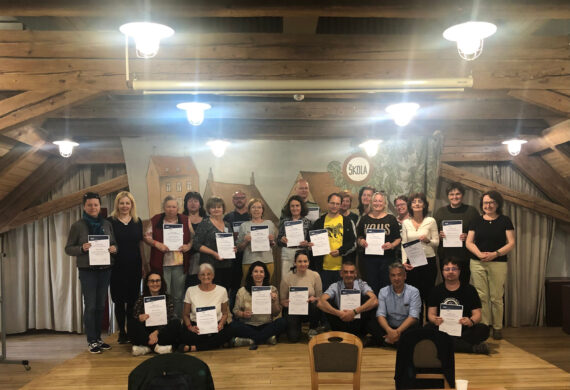
In late August 2012, French language again sounded through the Terezin Magdeburg barracks. The Terezin Memorial hosted already for the third time French teachers who came here under the auspice of the Maison d´Izieu Memorial for a one-week educational seminar.

Two days of their programme the participants spent exploring the Prague’s Jewish Town and the National Monument in Vitkov. The rest was devoted to the history of the Terezin ghetto, the Gestapo police prison in the Small Fortress and the concentration camp in Litomerice. The teachers visited all mentioned places, attended lectures and workshops giving them insight into life in these repressive institutions. Very interesting were discussions on the ghetto roles in propaganda and camp propaganda films at all. One of the top points on the schedule was a  discussion with Ivan Klima and Helena Klimova. Ivan Klima spent a few years in the ghetto as a small boy and his wife Helena works as a psychotherapist dealing with people who were affected by the holocaust itself or are descendants of those who survived. Both of them presented different views of the issue. At the end of the seminar, the participants visited the Lidice Memorial. Many of them were leaving Terezin full of new information and knowledge and some of them with a decision to bring their pupils and students to the Terezin memorial sites.

Se

Seminar for Danish teachers

Danish teachers at the attic of the former Magdeburg Barracks, Terezin Memorial

Danish teachers at the attic of the former Magdeburg Barracks, Terezin Memorial

The Terezin Memorial, and in particular the former Terezin ghetto is the goal of many Danish schoolchildren. They come here to see places where 466 Danish Jews were interned during the war.

Knowledge of the fate of the Danish Jewish population and the Terezin ghetto involvement are among the key points of the education in Denmark. Teachers are in this respect greatly supported by the Danish Institute for International Studies, the result of which is for example the website www.theresienstadt.dk, where can be found information and documentaries on the situation of Jews in Denmark and subsequently also their deportation and life in the Terezin ghetto. The websites are accessible in Danish and English.

The cooperation of this institute and the Israeli Yad Vashem Memorial led to a plan to bring the Danish teachers directly to Terezin, to provide them with the knowledge base and to introduce the possibilities that the Terezin Memorial offers to youth groups.

In mid-September 2012, the first seminar for Danish teachers took place in the Terezin Memorial. They spent here three days full of workshops, lectures, meetings with Czech educators and also with a survivor of the Terezin ghetto, Mrs. Doris Grozdanovičova. One of the programme highlights was also the life performance of children opera “Brundibar” by Hans Krasa acted by the Disman radio children Ensemble.

Se

Terezin Memorial awarded by the tourism portal TripAdvisor

Seal „Trip Advisor“ in the former Magdeburg Barracks

Seal „Trip Advisor“ in the former Magdeburg Barracks

International tourism portal TripAdvisor acknowledged the service quality that the Terezin Memorial provides to its visitors and awarded the three main objects – Small Fortress, Ghetto Museum and former Magdeburg Barracks with a recommending seal. This award is granted based on the evaluation given to the site/object by the tourists who had visited the place and expressed their satisfaction with the services provided.

Database of prisoners and victims in English Language

Over a year ago, website search engines of persecuted people were made accessible  to the general public (e. g. the database of Gestapo police prisoners in the Small Fortress, inmates of the concentration camp Litomerice, database of victims of the Terezin ghetto and others). So far, however, the information was available only in Czech language. From now on all the databases can be found on the Terezin Memorial websites also in English.

Terezín Memorial Activities

Seminars for Czech teachers “How to teach about the Holocaust”, 2 terms: March 15 – 17, 2013 and March 22 – 24, 2013.

Newsletter Archive

Projects of Czech schools

Theresienstadt Family camp in Auschwitz

Videos from the Protectorate:

Interesting videos:

Other videoarchives

Terezín Memorial on Facebook

Newsletter

Editorial board: Naďa Seifertová, Ludmila Chládková
Authors: Lenka Doležalová, Jana Havlínová, Ludmila Chládková, Kateřina Joklová, Jiří Kleker, Naďa Seifertová, Pavel Straka, Jana Šmolová, Jan Špringl
Contact Us: newsletter@pamatnik-terezin.cz

Random Quote

Úterý 19. ledna 1943
Cesta byla mizerná. Vstávala jsem velice brzy, ale tak tak jsem byla hotová. Byla jsem tak navlečena, že jsem se nemohla pohnout. Tatínek, teta, Trude a Lea se vezli na saních v Kyjově na dráhu. Strýc Karel a Maří táhli saně a já tlačila. Byli jsme rádi, že jsme se dostali na dráhu, tolik napadlo sněhu. Sháněli jsme zavazadla, ale bylo poměrně málo šumu, myslela jsem, že budou všichni jako bez hlavy. Ve vlaku nebylo místa na sezení. Tatínek při nastupování spadl a zdvihla ho paní doktorová Schöntalová, která velice plakala (je árijka).
Když se vlak rozjížděl, začala všechna kyjovská mládež zpívat české národní písně, za brblání Němců. Jeden četník, který stál u vlaku, byl velice pohnutý a přešel kolem vlaku, každému známému přál šťastný návrat. Za jednu a tři čtvrtě hodiny byli jsme v Uh. Brodě. Nemohla jsem unést svůj baťoh. Dali jsme ho tedy na nákladní auto, tatínek, Trude a Lea jeli také.
… Vzala jsem si 2 chlebníky a a 2 tašky a šla jsem. Když jsem došla do reálky, kde jsme byli kasernovaný, myslela jsem, že upadnu. Paní Vepřekovská mě zavedla k tetě. Ležíme na jedné matraci…
— (Z deníku Helgy Pollakové, popisuje odjezd Židů z Kyjova ke shromaždišti v Uherském Brodě), Brenner-Wonschicková, Hannelore: Děvčata z pokoje 28, Přátelství, naděje a přežití v Terezíně, Barrister & Principal, Praha, 2006, ISBN: 80-87029-03-8.