
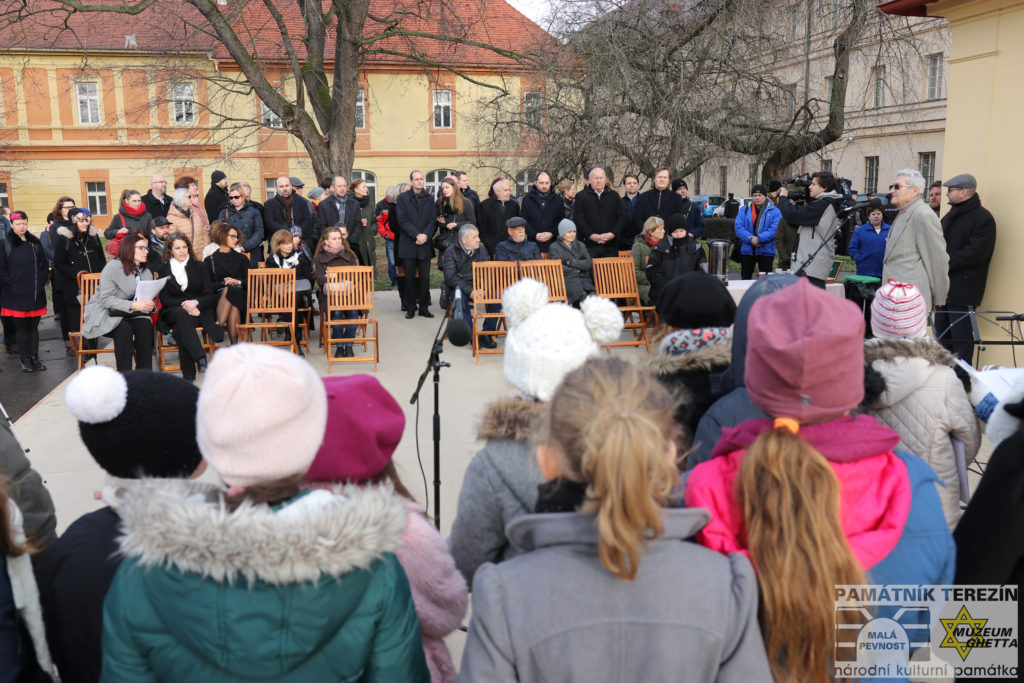
In January 2020, the Terezín Memorial opened its new historical-documentary exhibition devoted to transports, vitally significant events in the life of Terezín inmates. Even though these topics are briefly explored in the main exhibition of the Ghetto Museum, the newly opened permanent display offers a wealth of information both on the incoming transports to Terezín, and primarily on the transports leaving the Terezín Ghetto.
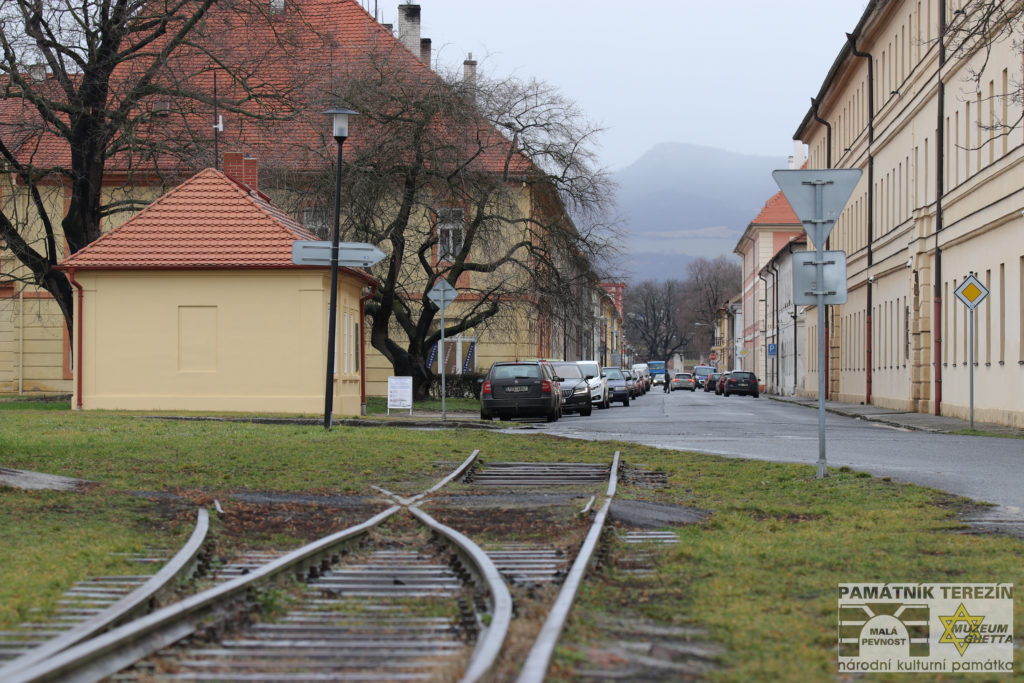
Installed in the former Municipal Weigh-house (Stadtwaage), the exhibition makes ample use of the space of the nearby Bohušovice Gate where the railway siding entered the former Ghetto. The preserved original railway sleepers stretching close by the exhibition site serve to heighten visitors´ impressions of authenticity.
The first, outdoor panel is given over to the history of the building itself, tracing its different uses in the years 1942-1945, from a facility designed to isolate mentally ill Jewish children, via a gas chamber used for delousing luggage to a building housing members of the so-called haulage center who loaded and unloaded goods and materials vital for the operation of the Terezín Ghetto.
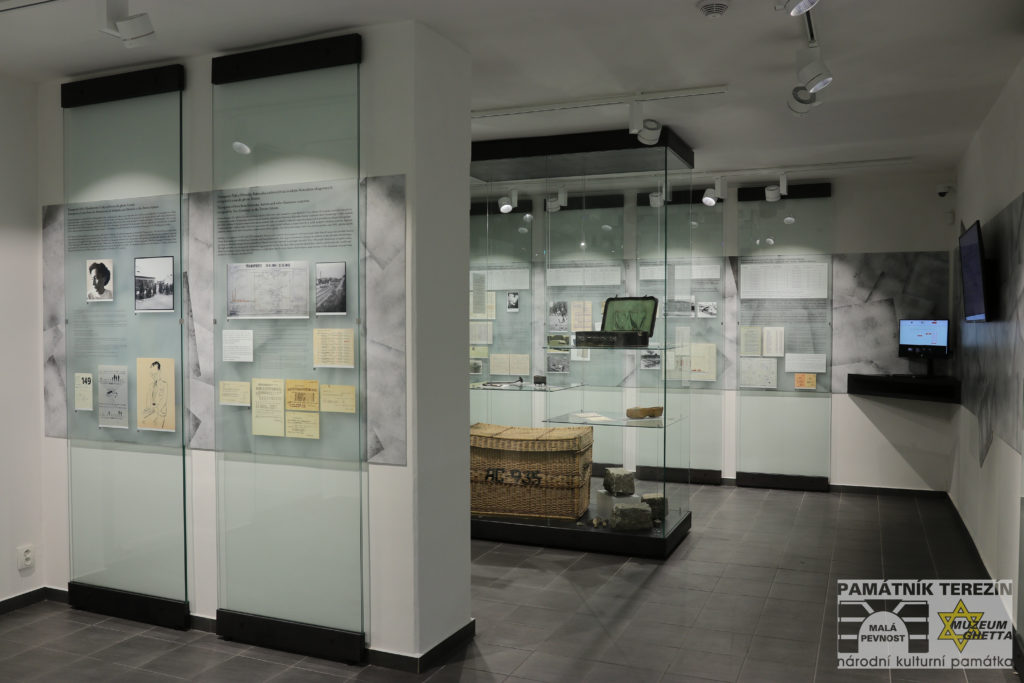
Inside, the exhibition is divided into four thematic sections. The first one introduces visitors to the process of preparing deportations and the purpose of assembly points for Jewish citizens (e.g. those in Prague´s Radiotrh or in Uherský Brod) in the Protectorate of Bohemia and Moravia from which transports departed for Terezín. In addition to other exhibits, visitors can view not only documents concerning the construction of the railway siding itself; they will also learn about the mechanism of receiving and registering inmates in the Terezín Ghetto. This particular reception procedure in the so-called Schleuse is vividly depicted by scenes from the first ”documentary” shot by the Nazis in Terezín in 1942.
The second section chronicles the first transports of Jews from the Protectorate of Bohemia and Moravia and other European countries. Foreign transports started to arrive in Terezín after the Wannsee conference in Berlin, held at the beginning of 1942 to discuss further proceedings in the so-called Final Solution to the Jewish Question, a Nazi euphemism for the program of genocide of European Jewry.
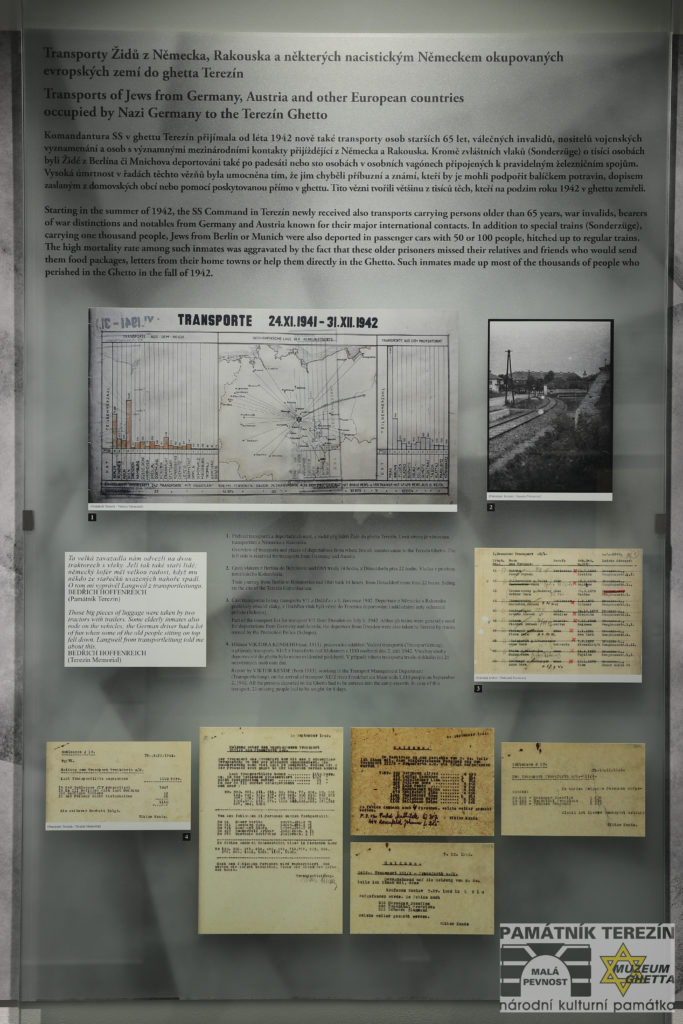
The exhibition´s third and largest thematic block highlights, in a chronological order, the actual functioning of the system of dispatching transports from the Ghetto to the Nazi extermination, concentration and labor camps. In practical terms, this section is divided into two parts, prior to Auschwitz and the Auschwitz transports. The former covers all the transports dispatched to the East that left the Terezín Ghetto before October 26, 1942, the day when the first transport to Auschwitz-Birkenau departed from Terezín. The individual exhibition panels describe what happened to the Terezín inmates on and after arrival at their destination, outlining their chances of survival. On display are some interesting exhibits, including a chart comparing the rate of outgoing transports from the Terezín Ghetto and their potential impact on the cases of suicides or attempted suicides in the Ghetto. The chart shows an almost identical rise and decline in such cases during the dispatch of Eastern transports, illustrating the horrors the Terezín inmates must have experienced at the time of the departure of those deportations.
The final section portrays the tragic history of evacuation transports arriving in Terezín from the concentration camps evacuated before the advancing front during the last days of the war. This section also displays relevant documents shedding light on the postwar repatriation of the freed Terezín inmates. All the major subjects in this section are interlaced with excerpts from the recollections of the former Terezín prisoners.
To make this presentation of the Memorial´s new exhibition on transports complete, let us mention its two major components. In addition to the exhibition panels, visitors may view a showcase containing several noteworthy exhibits from the collections of the Terezín Memorial. These include inmates´ suitcases or their parts, a unique scale model of a railcar, probably a toy found in the attic of a Terezín house. Other interesting exhibits are three original cobblestones taken from a road in Bohušovice along which the Jewish inmates walked towards the Terezín Ghetto in the summer of 1943. These cobblestones were acquired during the construction of a new circular road at Bohušovice nad Ohří.
Another novelty of which visitors to the exhibition should be definitely aware is a multimedia device offering them access to the Terezín Memorial´s new database (https://www.pamatnik-terezin.cz/databaze) and to its data on politically and racially persecuted persons. This makes it possible to undertake a virtual visit to the ”Memorial Book“ of the former Terezín inmates that has not been available to the visitors in the exhibition premises of the Terezín Memorial so far.
Tomáš Fedorovič

